
Pharmaceutical Forensics & Particulate Investigations
Gateway Analytical identifies, characterizes, and compares foreign particulate matter using forensic evidence handling, microscopy, spectroscopy, SEM-EDS, and interpretation.
Gateway Analytical was founded as a specialized pharmaceutical forensics laboratory. We apply forensic trace evidence principles, contamination-controlled sample handling, complementary analytical methods, and expert interpretation to foreign and unknown particles found in your products, packaging components, medical devices, and manufacturing environments.
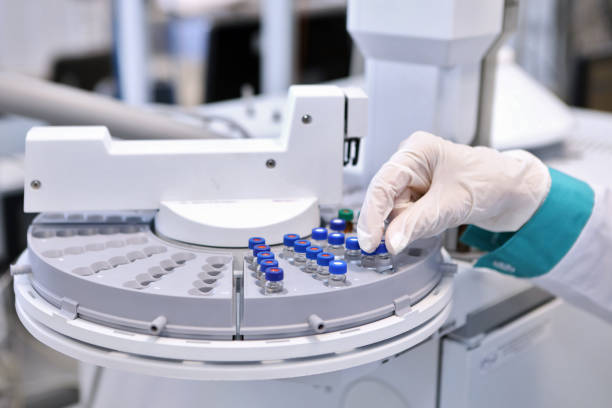
Complementary Analytical Methods
Optical Microscopy
Evaluate particle size, shape, color, texture, surface features, transparency, and other visible characteristics
Polarized Light Microscopy
Examine optical behavior, such as extinction and birefringence, where relevant to the material
FTIR Spectroscopy
Evaluate molecular information useful for identifying or comparing many organic materials
Raman Spectroscopy
Provide complementary molecular information and support analysis of appropriately-sized particles
Scanning Electron Microscopy with Energy-Dispersive X-ray Spectroscopy
Generate detailed surface imagery and elemental composition data
Flow Imaging Microscopy
Evaluate images, size, morphology, and populations of subvisible or visible particles in liquid samples
What is Pharmaceutical Forensics?
Pharmaceutical forensics applies forensic trace evidence principles, analytical techniques, and investigative reasoning to physical evidence related to pharmaceutical products, packaging, components, processes, and manufacturing environments. This evidence typically appears as unknown material: visible particulate matter, unexpected residues, and other materials not intended as part of the pharmaceutical manufacturing process. It’s particularly relevant when the unknown material is:
- Microscopic
- Limited in amount
- Complex or Mixed
- Associated with Formulation Residue
- Unknown Origin
- Difficult to Isoloate
- Potentially Related to Several Sources
- Insufficient for Single Analytical Technique
The goal isn’t to force certainty from limited evidence. It’s to determine what the evidence supports, what it doesn’t establish, and what additional information may be needed.
Particulate investigations begin with handling the analytical evidence
Particles may be less than a few millimeters in size. Poor sample handling can introduce contamination, lose the particle, alter the evidence, or bias the result, which is why we pay close attention to:
- Sample Receipt & Documentation
- Material Recovery
- Particle Isolation
- Contamination-Controlled Handling
- Sample Preparation
- Microscopic Examination
- Transfer Between Analytical Techniques
- Reference Material Handling
- Data Traceability
- Final Reporting
More Than Disconnected Test Results
We integrate observations and results across methods. Our reports are designed to explain:
- What Was Examined
- How The Evidence Was Handled
- What Each Method Demonstrated
- How The Findings Relate to One Another
- What Material Identification or Association Supported
- Which Limitations Remain
- Whether Additional Comparison or Investigation May Be Useful
This interpretive discipline is central to our identity in pharmaceutical forensics.

Looking for Clarity on Product-Quality Decisions?
Ensure drug product and medical device safety through our pharmaceutical forensics approach to evidence, study design, interpretation, and decision support for pharmaceutical and medical device companies across the globe.
What We Can Help You Investigate Particulate Investigations from the Experts
We tailor the analytical approach to your question. Rather than defaulting to every available technique, we select methods based on the particle, the suspected materials, and the decision you need to make.
- Visible Foreign Particles
- Product Complaints
- Manufacturing Deviations
- Recurring Particulate Findings
- Packaging-Related Particles
- Component Fragments or Fibers
- Glass or Mineral-like Particles
- Elastomeric or Polymeric Matter
- Metallic or Corrosion-related Material
- Product or Formulation-associated Matter
- Consumables and Single-Use Systems
- Medical Device Particulate Concerns
- Medical Device Particulate Concerns
- Product Failures Involving Physical Evidence
Supporting Root-Cause Determination
We can identify and characterize particles, compare them with potential sources, differentiate among submitted materials, and help narrow the range of investigative hypotheses. Our findings might show that the unknown material:
- Consistent with a Potential Source
- Supports Association with Submitted Reference
- Differs Meaningfuly from proposed Source
- Belongs to Particular Material Class
- Includes Product or Formulation Residue
- Insufficient to Distinguish Among Sources
Analytical testing can support root-cause determination, but a complete investigation may also call for manufacturing records, supplier information, equipment history, environmental data, process expertise, and other evidence you own or control.
Start with the particle, observation, or event.
- cGMP Compliant & FDA, EMA, DEA Registered Laboratory Facility
- Specialized in Particulate Identification & Material Characterization
Have a complex product-quality question? Let’s define the right analytical path forward.
Gateway Analytical applies pharmaceutical forensics, specialized analytical testing, and expert interpretation to help regulated life science companies understand particulate, package integrity, subvisible particle, and component performance challenges.
Particulate Risk Investigation and Root-Cause Resolution
Container Closure and Product-Package Integrity
- Cryogenic Packaging & Transport Simulation Studies
- Vacuum Decay Studies
- MicroCurrent High Voltage Leak Detection (HVLD)
- Laser-Based Gas Headspace Analysis
- Vials, Syringes, Cartridges, & Difficult Configurations
- Custom Method Development and Validation Across Multiple Platforms
- “Which CCIT Method Fits My Package?” use-case page
Visible & Subvisible Particle Characterization: Beyond Compendial Counts
Parenteral Packaging Functional Suitability
Biologics & Protein Therapeutics
Flow Imaging Microscopy (FIM/MFI) and orthogonal testing to instantly separate protein aggregates from silicone oil and foreign debris. By tracking particle morphology across formulation and packaging changes, we give you the technical clarity to de-risk development and satisfy regulatory scrutiny.
Sterile Injectables & Parenteral Manufacturers
Gateway delivers rapid, definitive particulate identification, complaint investigation support, and root-cause resolution alongside cGMP USP particulate testing to keep your operations moving. Paired with deterministic Container Closure Integrity Testing (CCIT) and USP <382> functional suitability evaluations.
Advanced Therapies (Cell & Gene Therapy)
Gateway specializes in low-volume particulate investigations, single-use component evaluations, and cryogenic container performance studies tailored to this evolving regulatory landscape.
Solving Drug Product Risks with Gateway Analytical. Applying Lifecycle Quality Risk Intelligence.
At Gateway Analytical, we apply Lifecycle Quality Risk Intelligence to connect analytical evidence across your entire product journey—combining rapid root-cause particulate identification, deterministic container closure integrity, subvisible particle characterization, and functional suitability testing.
By translating isolated laboratory data into long-term product understanding, we give your quality, operations, and regulatory teams the technical clarity and scientific proof needed to mitigate risk, resolve deviations, and release product with total confidence.
Technical Documentation & Resources
Connecting Analytical Evidence Across Your Drug Product Journey
By bridging our four core service areas: Particulate Investigations, Container Closure Integrity, Subvisible Characterization, and Functional Suitability—we transform routine laboratory data into deep product understanding, investigation readiness, defect prevention, and total regulatory confidence.
